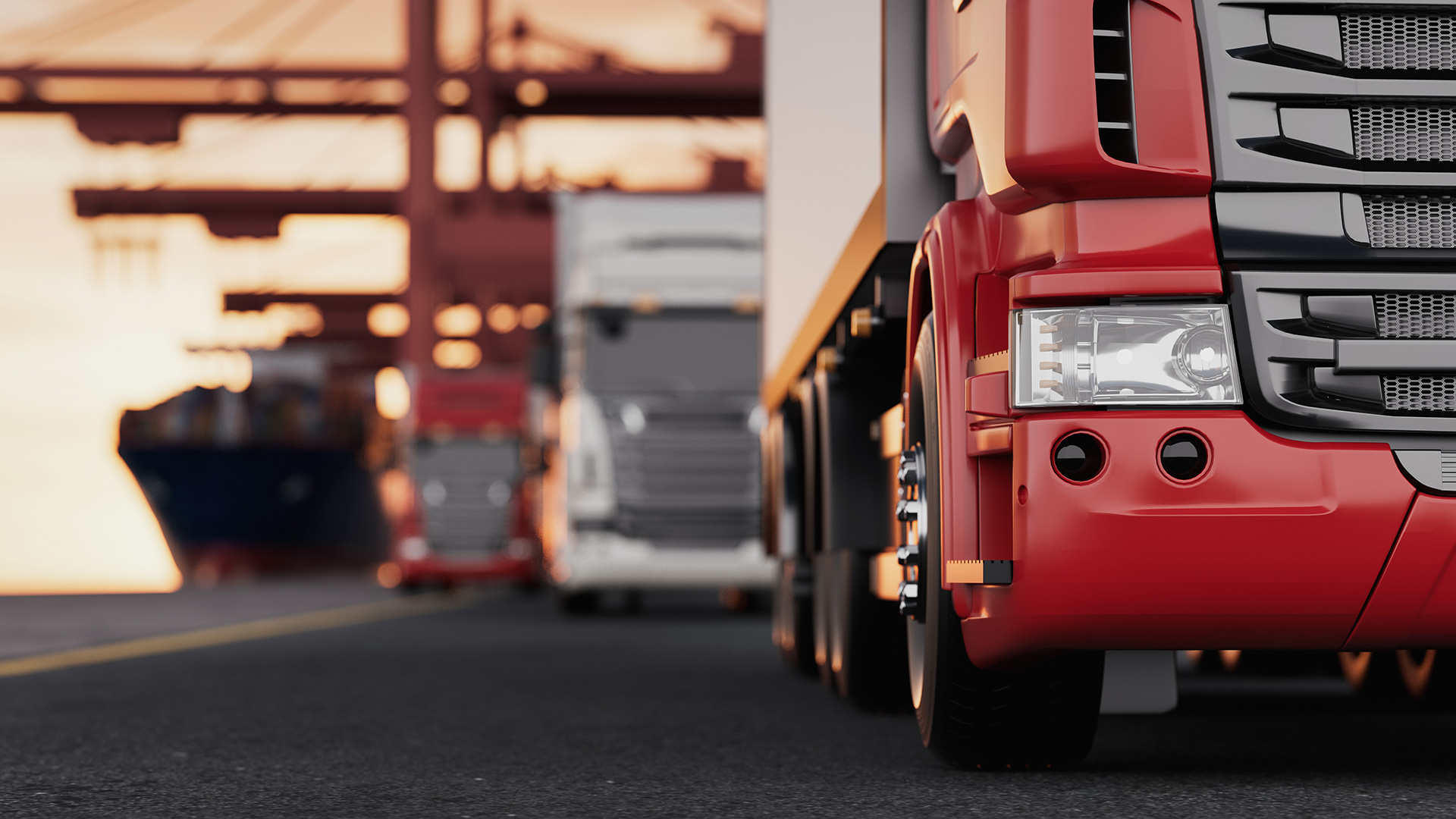
 Transport carried out in the Just-in-Sequence (JIS) model is today the foundation for building competitive advantage. In an environment where precise synchronisation of logistics with the rhythm of production determines profitability and there is no margin for error, reliability becomes a strategic resource. Here, each component must reach the assembly line in a strictly defined sequence and time window.
Our offer is addressed to manufacturers in the automotive and heavy industry sectors, for whom ‘quality’ means no downtime. We have our own fleet, experienced drivers and EDI data integration systems at our disposal. We do not build sequential processes based on transport exchanges. We assign dedicated rolling stock and permanent drivers who are familiar with the specifics of JIS deliveries and can cope with time pressure.
Sequential logistics instead of Just-in-Time – who will benefit most from JIS transport?
The Just-in-Time model focuses on delivering goods at a specific time in order to reduce overall inventory levels, but allows for bulk deliveries of homogeneous batches. Sequential logistics (Just-in-Sequence) extends this concept with a strict requirement to deliver components in a precisely defined order, perfectly synchronised with the current assembly schedule for specific product units. As a result, components go directly from the lorry to the production line, completely eliminating the internal sorting and picking stage that is necessary in classic JIT.
The main beneficiaries of this model are manufacturers operating in conditions of so-called mass customisation, where each final product has unique specifications and equipment configuration. The greatest business value from the implementation of JIS transport is gained by entities from the automotive sector, truck manufacturers and manufacturers of advanced household appliances, who have to manage a huge variety of components in a limited plant space. For these companies, sequential logistics is becoming a strategic tool, enabling the flexible assembly of thousands of different product versions on a single conveyor belt without the need to invest in expensive warehouse infrastructure along the line.
The scope of logistics operations in the JIS model
The provision of transport services in the Just-in-Sequence model by Jasek Transport is based on the complete integration of planning processes with execution. We begin our cooperation with advanced route engineering, including the analysis of logistics loops and the selection of dedicated rolling stock adapted to the specific nature of sequential loads. A key aspect of this stage is the precise synchronisation of transport schedules with the time slots applicable at the recipient’s unloading gates, which eliminates unnecessary downtime and optimises drivers’ working time.
The foundation of our operational activities is the digital flow of information, which precedes the physical movement of goods. We ensure full transparency of the supply chain through the possibility of integrating telematics systems with the contractor’s ERP/EDI software. This enables real-time monitoring of order status and automation of notification processes. As a result, the recipient’s warehouse staff has reliable information about the estimated time of arrival (ETA), which is essential for the smooth supply of the production line.
Transport is carried out using a direct-to-line system, bypassing buffer warehouses, which requires us to maintain strict discipline and knowledge of internal industrial plant procedures. However, the operator’s responsibility does not end at the point of unloading. The service also includes comprehensive reverse logistics management, including the collection, recording and transport of empty packaging and certified load carriers back to the supplier, which guarantees the closure of the material cycle in the supply chain.
Design and control of delivery sequences
The effectiveness of sequential logistics depends directly on the precise scheduling of transport operations, which must perfectly match the factory’s work cycle. As part of our services, we take full responsibility for the planning process, ensuring that the physical order of components in the cargo space remains intact and consistent with assembly requirements from the moment of loading to the moment of delivery. Professional sequence management in road transport allows us to eliminate the risk of picking errors that could disrupt the production rhythm. We implement solutions aimed at systemic optimisation of the flow of goods, which translates into stability of manufacturing processes and maximum operational efficiency of our contractors’ supply chains.
Time windows and punctuality standards (SLA)
The foundation for the provision of services in the Just-in-Sequence model is the strict contractual provisions of the SLA (Service Level Agreement), which transform the general concept of punctuality into measurable performance indicators. The specific nature of sequential deliveries forces the logistics operator to work on the basis of precise time slots, set with minute accuracy, which must be strictly correlated with the current pace of the recipient’s assembly line. In this operating environment, timeliness ceases to be merely a goal and becomes a critical parameter, where the acceptable time tolerance is often reduced to just a few minutes.
To ensure that these exacting standards are met, we have implemented advanced procedures that include active delay management. This system is based on continuous monitoring of the traffic situation and early detection of potential threats. If a risk is identified, we immediately activate an information pathway and contingency plans, which allows us to maintain control over the delivery process even in the face of unforeseen events.
IT integration and communication automation
Modern logistics services for sequential supply chains cannot function without reliable technological infrastructure that integrates transport processes with the production cycle. In order to ensure full operational transparency, we implement advanced EDI/API systems that enable direct, two-way communication between the operator’s software and the customer’s ERP system. This automatic data exchange eliminates the risk of human error when entering orders and guarantees immediate flow of information about the status of the cargo without the need to involve administrative staff.
Our IT infrastructure also provides advanced real-time monitoring of all journey parameters, giving dispatchers and logisticians full control over service delivery. We provide our contractors with dedicated tools for precise delivery tracking, allowing them to verify transport compliance with the schedule on an ongoing basis and make key operational decisions based on current location data.
Operational quality and JIS delivery control standards
Maintaining supply stability in a sequential model requires the implementation of rigorous supervision procedures that go beyond the standard understanding of cargo security. A fundamental element of our operational policy is to ensure that the sequence of components delivered is fully compliant with the recipient’s assembly plan, eliminating the risk of costly mistakes on the production line. In order to monitor the effectiveness of processes, we use precise quality indicators (KPIs) that allow for an objective assessment of the timeliness and accuracy of each transport operation.
Our management system also includes multi-level error control, operating both at the route planning stage and during the physical transport, which allows for early identification and neutralisation of potential deviations. These activities are complemented by regular internal logistics audits to verify the procedures used and continuously improve service standards based on historical and operational data collected.
How is JIS transport priced?
The pricing of transport services in the Just-in-Sequence model differs significantly from standard tariffs based on a simple rate per kilometre or pallet space. It is a complex project-based calculation aimed at estimating the total cost of securing the process (TCO), not just the physical movement of the load. The final contract price is the result of many variables, the key one being the need to maintain a dedicated fleet. In practice, this means that the vehicle and driver remain at the contractor’s full disposal, not carrying out other market orders even during breaks between deliveries, which generates a fixed operational readiness cost.
The billing model must also take into account the specific nature of logistics loops, in which transport is rarely one-way. The freight rate usually covers the full round trip, including the cost of transporting empty returnable packaging, which is necessary to maintain the continuity of the production cycle. Another important element of the budget is the premium for operational risk and technological costs associated with the implementation of dedicated IT integration systems and the payment of high insurance policies to protect against the financial consequences of a possible stoppage of the recipient’s production line.
How to order JIS transport and what information is needed for this?
Launching transport services in the Just-in-Sequence model is not a standard forwarding order, but a complex design process that requires detailed operational analysis before a binding offer can be prepared. In order for our logistics engineers to develop a precise cost calculation and implementation plan, it is necessary to provide a complete set of data defining the parameters of the logistics loop. The basis for the quotation is a detailed specification of the transport relationship, taking into account not only the place of loading and unloading, but also the frequency of delivery cycles and requirements for the circulation of returnable packaging.
Information about the type and dimensions of loading units, such as Gitterbox cages, KLT containers or specialised racks, as well as the expected transport volume broken down by production shifts, is crucial for selecting the appropriate dedicated fleet. Equally important is data on the time regime, including the rigidity of time slots and the required response time in emergency situations. The request for quotation should be supplemented by system integration requirements, specifying the preferred data exchange protocol (EDI/WebAPI) necessary for the automation of notifications and status flows.
Jasek Transport – Your strategic partner in JIS logistics in Poland and Europe
Jasek Transport focuses its operations on serving the most demanding links in the supply chain, namely transport carried out under the rigorous Just-in-Sequence model. Our expertise in sequential logistics extends beyond the local market to include complex cross-border projects throughout the European Union. As an operator with our own modern technical facilities, we guarantee our partners full control over the transport process, eliminating the quality risks typical of chains based on anonymous subcontractors.
Thanks to many years of experience in working with leaders in the automotive and heavy industry sectors, we perfectly understand the specifics of working within strict time frames and the critical consequences of potential production line downtime. Our business model combines international reach with direct supervision and responsibility, allowing us to effectively serve logistics loops connecting factories and suppliers across Europe. By choosing Jasek Transport, you gain a partner who treats the stability of your production as an absolute priority.
Just-In-Time sequential transport for production lines – frequently asked questions
Do you carry out orders exclusively with your own fleet?
Yes, the basis of our business model in sequential logistics is the use of our own modern fleet of vehicles. At Jasek Transport, we consciously choose not to entrust critical JIS deliveries to anonymous subcontractors from transport exchanges. Having full control over the technical condition of our vehicles and direct supervision over our employed drivers allows us to guarantee the reliability and responsibility required when servicing production lines.
How is the status of a delivery monitored?
We ensure full transparency of the transport process through advanced telematics systems. Every vehicle in our fleet is equipped with GPS transmitters, which enable real-time tracking of the cargo’s position (Real-Time Visibility). We provide our contractors with dedicated links to view the route or integrate our systems directly with the customer’s software, which allows for ongoing verification of the estimated time of arrival (ETA) and automation of notification processes.
Does the offer include the return of empty packaging (Reverse Logistics)?
Yes, we treat logistics services in the Just-in-Sequence model as a closed process. The management of returnable packaging is standard in our projects. We transport empty load carriers, such as Gitterbox cages, KLT containers or dedicated racks, back to the component supplier. This allows us to maintain the continuity of the material cycle and optimise costs by utilising return vehicle journeys.
What procedures apply in the event of a vehicle breakdown en route?
We are aware that in sequential transport, any delay may result in production stoppages, which is why we have extensive crisis management procedures in place. In an emergency, we immediately activate a recovery plan, which involves providing a replacement vehicle from our fleet in the shortest possible time. Our dispatchers are available 24/7 and are authorised to make quick operational decisions, including organising time-critical transport, to minimise the impact of the incident on the delivery schedule.
Do you provide deliveries on a continuous basis (weekends and public holidays)?
Sequential logistics must be fully synchronised with the factory’s work rhythm, which is why our services are available 7 days a week, 24 hours a day. We adjust drivers’ work schedules and fleet staffing to our customers’ shift production system, delivering also on weekends and public holidays. However, possible traffic restrictions during this time must be taken into account.